About LitFin Intelligence
We are a small team in Dar es Salaam, working with lenders first so smallholder farmers can get loans.
Today LitFin Intelligence appraises agricultural credit files for lenders in Tanzania. The rest is still being built.
How it began
Why we started LitFin Intelligence
To read an agricultural credit file well, a lender needs farming and credit-committee experience in the same person. Not many officers have both, and a lender cannot afford to send every file to the few who do.
Guarantee schemes, group lending and warehouse receipts all exist to make lending to farmers less risky. Each was set up on its own, and each sees only its own part of a farmer's loan. We are building a way to bring those parts into one file. We started with the lender, because that is where the financing is.
The way we read a file comes from our two mentors. Anderson spent his career in banking and credit, and taught us to ask whether the borrower can repay. From Aloys, who has spent his working life in agricultural production, we learnt to ask whether the field or the poultry house being financed will produce. An agricultural file needs both questions answered.
Dar es Salaam, Tanzania
Where the team is based.
Tanzania
The only country we work in today
Lenders
The side we work on today
Early
Our stage as a company
Two languages
Swahili or English, as you choose
The team
Two founders and two mentors
George and David build the service. Anderson and Aloys bring the credit and farming experience it is built on.
Why these two mentors
Both have spent their working lives in Tanzania's agriculture: Anderson financing it as a banker, Aloys as a producer. They are also investors in the company.

George Mwikila
Co-founder and Chief Executive Officer
George is LitFin Intelligence's technical founder and built the platform end to end. Before LitFin Intelligence he spent more than seven years in engineering at Finimize in the United Kingdom.
He holds a Bachelor of Finance from Minerva University and is based in Dar es Salaam.
Bachelor of Finance, Minerva, United States7+ years engineering, Finimize, United KingdomBased in Dar es Salaam
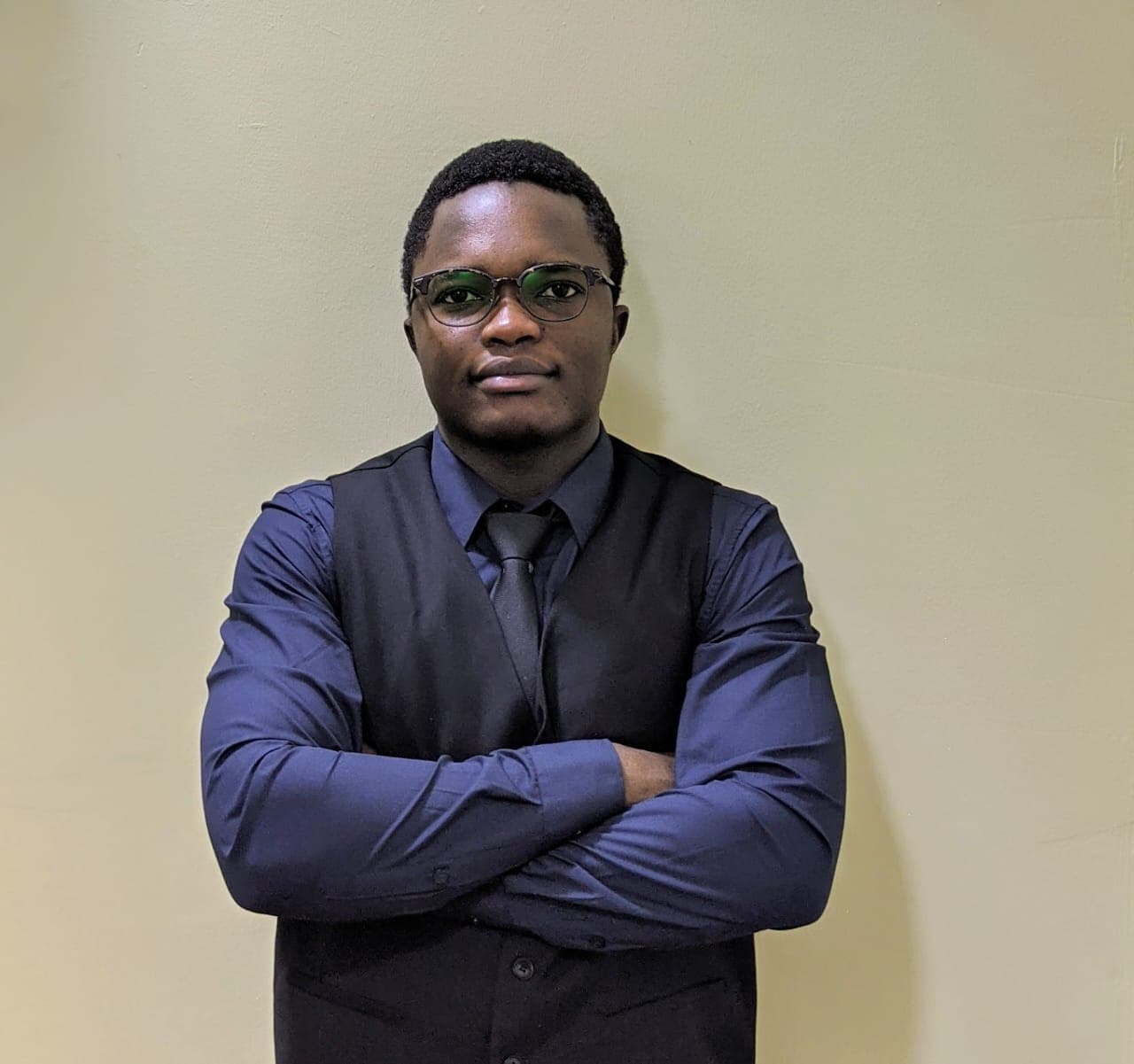
David Anderson Mlabwa
Co-founder and Chief Operating Officer
David leads research, data and field operations at LitFin Intelligence. His background is in data analysis and business analytics, and he spoke at Fintech Festival Tanzania 2025 on data privacy.
He holds a BSc (Hons) in Information Systems from Sunway University, Malaysia, and is based in Dar es Salaam.
Studied and worked, United Kingdom and MalaysiaData analysis and business analyticsBased in Dar es Salaam
Anderson Yohana Mlabwa
Mentor and Investor
Anderson spent 29 years in banking at one of Tanzania's largest banks, 17 of them as Director of Credit and Secretary of the Board Credit Committee. He coordinated a regional programme de-risking agricultural finance for smallholder farmers in four African countries.
He studied agriculture at Sokoine University of Agriculture and holds an MBA in Finance.
MBA Finance (UDSM)CPA (NBAA)Associateship Banking Diploma (CIB London)
Aloys Mwikila
Mentor and Investor
Aloys has worked in agricultural production for four decades. He has helped large companies across industries, especially poultry, establish their production lines in Tanzania, and has trained farmers from first planting to commercial scale.
He studied agriculture at Sokoine University of Agriculture.
Four decades in agricultural productionTrains farmers to commercial scaleBased in Tanzania
What we do
Available today
Credit appraisal, underwriting and risk analysis on agricultural credit files, for lenders.
Credit appraisal of agricultural files
Mwikila, our AI Senior Agriculture & Finance Consultant, reads the whole file, including pages photographed on a phone, asks the questions the file raises and writes the appraisal a credit committee reads. Any page he could not read is listed.
Underwriting and risk analysis
We do both on the same file, and each figure shows where it came from.
Tested on agricultural files
Tested on agricultural files with officers from a major agricultural lender that plays a large de-risking role for agricultural loans in Tanzania. We do not name the lender.
How your data is held
Each organisation's data is kept separate from every other's and encrypted, and we handle it under Tanzania's data protection law. Our data protection page says where it is processed.
What we are building
Next, we follow the loan out to the farm
We want a lender to see everyone a farmer's loan relies on, and what was checked about each of them. None of this is live yet; we are building it.
Value chains
One appraisal across a value chain: the farmers, input supplier, buyer and lender.
Groups
Help for farmers who want to form a group a lender can finance, while the lender still sees each member.
On the farm
Village-based agronomists will advise farmers and check the plot, the inputs and what is delivered, working with Mwikila.
Beyond the lender
Mwikila for the farmer, the buyer, the insurer and the guarantor too, each in their own language and about their own work.
The season
Following a loan from planting to harvest, so a problem shows up while there is still time to act.
East Africa
Other East African countries would follow Tanzania, with the work fitted to each country's rules and farming. For now this is a plan.
Build it with us
If you lend to farmers, run a programme for them or build technology, and you want to help join up the tools Tanzania already has, write to us.
Our values
What we hold ourselves to
Four things we hold to, whatever we build.
Loans that reach farmers
Value chain finance and group finance were designed with smallholder farmers in mind. We are working to get those loans to them.
You decide
Mwikila reads the file and explains each of his conclusions. The decision to lend is made by the lender's officers and its credit committee.
Files kept safe
We hold other people's financial records, so protecting them was part of the plan from the start.
Tanzania first
We start from how lending is done in Tanzania, by its own rules, for its own crops and seasons.
Tell us what you do
If you lend to farmers, insure or guarantee their loans, buy their crops or advise them in the field, we will tell you what we can do for you today.